
 Advertisement
Security Staging & Secret Service Coordination for Political Event Valet
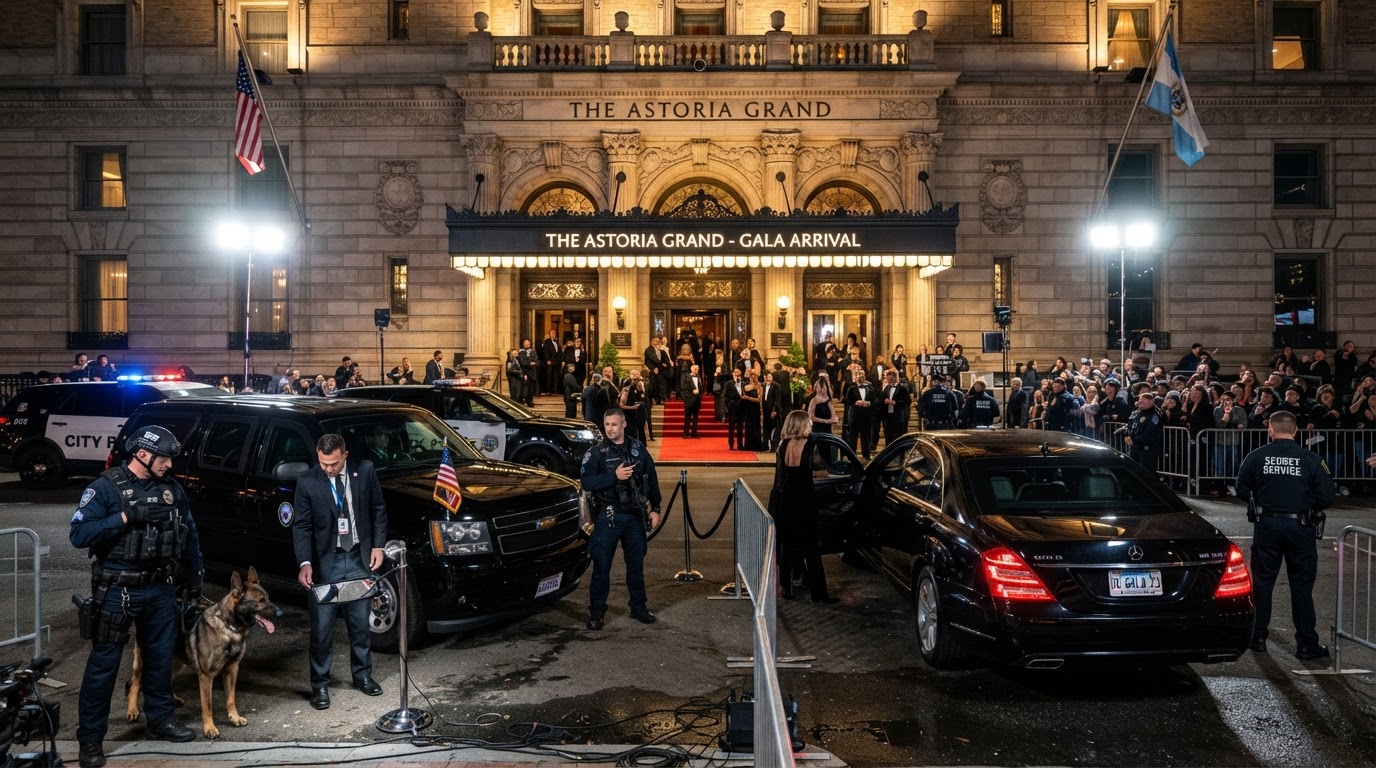
Navigating dignitary motorcades, metal detector perimeter staging, and credentialed driver screening.
High-profile political receptions require close coordination between private valet captains and law enforcement. The presence of elected officials, candidates, or foreign dignitaries transforms a standard event parking operation into a security exercise governed by protocols that leave no room for improvisation. Background-checked drivers and pre-cleared parking maps are mandatory, and the valet company that treats a political event like any other gala is a valet company that will not be hired for a second one.
When elected officials, foreign dignitaries, or political candidates attend private receptions, venue access shifts into a secured federal or state perimeter. Valet companies must coordinate operations directly with security advance teams days prior to the event. The advance team—often Secret Service, state police, or a private executive protection detail—will dictate the secure perimeter, the vehicle screening process, and the staging requirements, and the valet operation must fit within those constraints rather than the other way around. A valet captain who arrives on event day expecting to run the curb as usual will find their plans overridden by security personnel who have no interest in last-minute negotiations.
Attendants undergo background clearances and are issued security badges. Parking staging maps must detail dedicated escape routes and secure motorcade holding bays that remain completely clear of unauthorized attendee vehicles. The escape route is a path from the staging area to the venue exit that can be cleared and used at a moment's notice if a protectee needs to leave immediately. A single unauthorized vehicle parked in that route, even temporarily, can delay a departure by critical minutes, which is why the route must be coned, signed, and actively monitored for the duration of the event.
Vehicle screening is a process that varies by the level of protection required. For events with Secret Service protection, every vehicle entering the secure perimeter may be screened by a canine unit, a magnetometer, or a visual inspection before being allowed to proceed to the drop-off. The valet team must build this screening time into the arrival flow, because a screening checkpoint that takes 90 seconds per vehicle creates a queue that backs up onto public roads if not managed. Coordinate with the security team to determine the screening location, the expected throughput, and the protocol for vehicles that fail screening.
The motorcade holding bay is a dedicated staging area where the protectee's vehicle waits during the event, ready for immediate departure. This bay must be separate from general valet staging, secured against unauthorized access, and monitored by a dedicated attendant who does not leave their post. The vehicle is kept running or immediately accessible, and the keys remain with the attendant or the protectee's driver, never in the general key pool. The bay should be positioned for the shortest possible route to the exit, and the route should be rehearsed before the event so that the departure can be executed without hesitation.
Communication during the event must be disciplined and secure. Valet captains should use encrypted radios or a communication channel approved by the security team, and all communications should be professional and free of identifying information about the protectee. An offhand radio call—'The governor's car is staged at position three'—overheard by the wrong person can compromise security. Use vehicle numbers or position codes, not names, and limit radio traffic to operational necessities.
For events with multiple protectees, the staging operation becomes exponentially more complex. Each protectee may have their own security detail with its own protocols, and the valet captain must coordinate with each detail to ensure that staging, screening, and departure plans are aligned. A pre-event coordination meeting, attended by the valet captain and a representative from each security detail, is the forum where these plans are reconciled and conflicts are resolved. Skipping this meeting in the interest of saving time is a false economy that virtually guarantees confusion on event day.
Finally, plan for the unexpected. A threat, a medical emergency, or a schedule change can trigger an immediate departure with no notice. The valet team should have a rehearsed protocol for rapid vehicle retrieval, a clear chain of command for executing it, and a backup plan if the primary escape route is compromised. The goal is not to anticipate every possible scenario but to build a flexible, well-drilled operation that can adapt to whatever the event demands, because in the world of political event security, the one predictable thing is that something unpredictable will happen.
Planning an event with more than 50 guest vehicles? Professional valet parking planning ensures safety, prevents traffic gridlock, and gives guests a memorable first impression. Browse verified valet parking companies in your area to discuss attendant ratios, staging logistics, and insurance coverage.
Need Event Valet Services?
Browse verified valet parking companies in your city.
Advertisement