
 Advertisement
Exhibitor & VIP Load-In Parking Management for Major Trade Shows
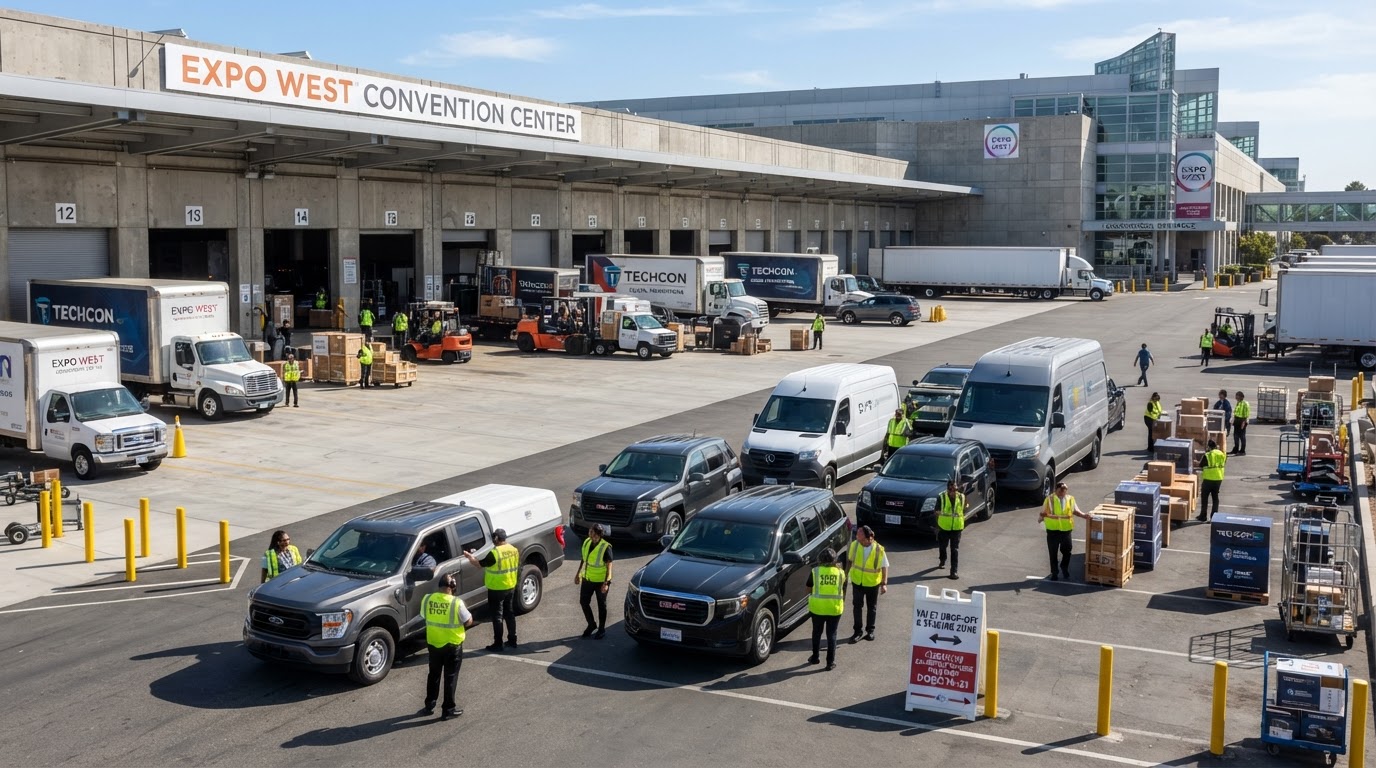
Streamlining booth load-in vehicle drop-offs and exhibitor parking pass logistics.
Trade show exhibitors require rapid drop-off access to loading docks before main attendee doors open. The success of a trade show, measured in booth sales and attendee satisfaction, begins long before the first visitor steps onto the show floor—it begins on move-in day, when exhibitors arrive with vans full of displays, products, and marketing materials and need to unload quickly, efficiently, and without the chaos that plagues poorly managed load-ins. Structured valets and staging operators coordinate loading zones to prevent truck congestion and keep the move-in on schedule.
Exhibitor move-in days at convention halls are notoriously chaotic. Without disciplined marshaling, delivery vans and contractor trucks double-park along loading docks, blocking freight elevators and causing costly schedule delays. An exhibitor who cannot access the loading dock on time cannot set up their booth, and a booth that is not ready when the doors open is a lost investment and a dissatisfied customer who may not return next year. The ripple effects of a disorganized move-in extend through the entire show, affecting attendee perception, sponsor satisfaction, and the venue's reputation.
Professional valet and staging operators implement scheduled load-in arrival windows, marshal vehicles in perimeter holding pens, and provide rapid 15-minute curbside unloading support before relocating exhibitor vehicles to long-term storage lots. The scheduling system assigns each exhibitor a specific arrival window—typically 30 to 60 minutes—during which their dock door is reserved and a staging team is ready to receive them. Vehicles that arrive early are held in a perimeter lot and called forward when their window opens, preventing the free-for-all that occurs when every exhibitor arrives simultaneously at 7 AM.
The marshaling operation requires clear communication. Exhibitors should receive their assigned window, dock door number, and marshaling instructions well in advance, along with a contact number for the staging captain. On move-in day, a marshaling attendant at the perimeter lot checks in each vehicle, confirms the window, and dispatches vehicles to the dock in sequence. A digital queue management system, displayed on a screen in the holding area, shows exhibitors their position in the queue and their estimated call-forward time, reducing the anxiety of waiting and the temptation to abandon the queue and drive directly to the dock.
Equipment handling is a specialized skill that not every valet attendant possesses. Exhibitor displays can include fragile electronics, custom-built cabinetry, and products worth tens of thousands of dollars. The staging team should include handlers trained in proper lifting, dolly use, and freight elevator operation, and the team should be briefed on any exhibitor with unusually heavy or fragile cargo that requires special handling. An attendant who drops a crate of glassware because they were rushing to meet a schedule creates a claim, a delay, and a dissatisfied exhibitor—all avoidable with proper training and adequate staffing.
The move-out at the end of the show deserves the same rigor. Exhibitors are tired, eager to leave, and often less patient than during move-in. A well-managed move-out schedules departure windows in reverse order of move-in, allowing exhibitors who arrived first to depart first, and it stages vehicles in the same perimeter holding pens to prevent a rush on the dock. The discipline that made move-in smooth must be maintained through the final vehicle's departure, because the last impression of the show is the move-out experience, and a chaotic exit can overshadow a successful event.
For multi-day shows with rolling move-ins—where some exhibitors set up on day one and others on day two—the scheduling system must accommodate overlapping windows without conflict. A clear, shared calendar accessible to the staging team, the exhibitors, and the venue's freight coordinators prevents the double-booking of dock doors and ensures that the move-in remains orderly even as it spans multiple days. The investment in a scheduling system pays for itself in reduced delays, fewer claims, and exhibitors who return year after year because the move-in, for once, was not the worst part of the show.
Planning an event with more than 50 guest vehicles? Professional valet parking planning ensures safety, prevents traffic gridlock, and gives guests a memorable first impression. Browse verified valet parking companies in your area to discuss attendant ratios, staging logistics, and insurance coverage.
Related Guides
Need Event Valet Services?
Browse verified valet parking companies in your city.
Advertisement