
 Advertisement
Designing Efficient Satellite Lot Shuttle Routes for Festival & Stadium Guests
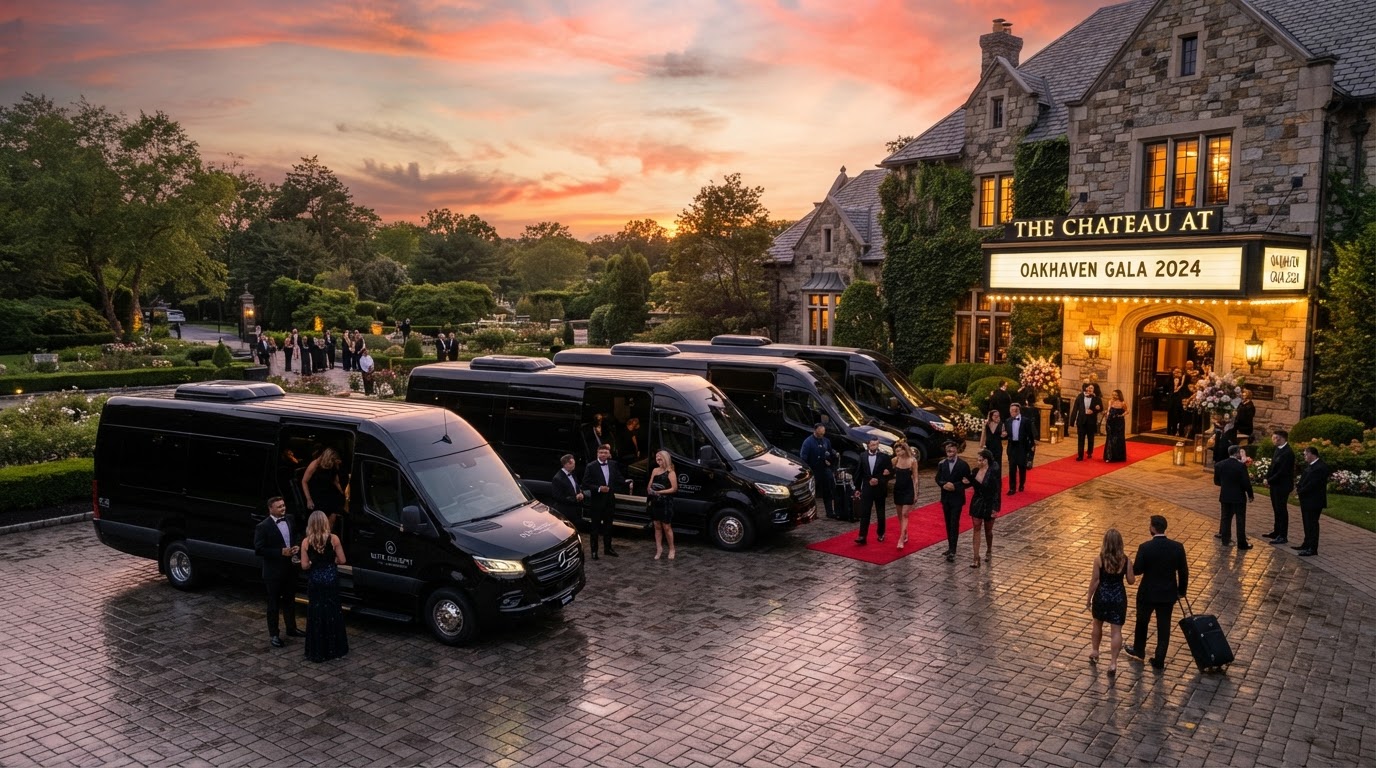
How luxury passenger vans and campus shuttles bridge off-site parking lots with main venue gates.
When primary venue lots fill up, satellite parking supported by high-frequency shuttle vans maintains a positive guest experience. The alternative—turning guests away at the gate or directing them to circle the block hoping for a spot—guarantees frustration and late arrivals that disrupt the event's schedule. A well-designed satellite shuttle system transforms an overflow problem into a seamless extension of the event's hospitality, greeting guests the moment they park and delivering them to the front door relaxed and on time.
A dependable satellite shuttle network relies on precise interval modeling. Planners must calculate round-trip transit duration—factoring in peak traffic lights, passenger boarding delays, and ADA wheelchair ramp deployment times—to guarantee that no guest waits longer than 7 to 10 minutes at any pickup hub. The formula is straightforward: divide the round-trip time by the number of vehicles in rotation to determine the headway between shuttles. If a round trip takes 20 minutes and you want a shuttle every 5 minutes, you need four vehicles in continuous rotation.
Boarding delays are the variable most often underestimated. A full 14-passenger van takes 3 to 5 minutes to board, longer if guests have luggage, strollers, or mobility aids. Build this into the model rather than assuming instantaneous loading, and position a boarding attendant at each hub to keep the process moving. During peak arrival surges, consider running a second attendant whose sole job is to queue the next group of passengers so that the van departs the moment the previous one clears the stop.
Providing comfortable executive Sprinter vans or high-capacity shuttle buses equipped with climate control, luggage racks, and onboard audio welcomes attendees long before they cross the venue threshold. Clear digital signage at satellite pick-up shelters reassures guests of departure intervals. For evening events, illuminate the satellite lot and shuttle stop with portable LED light towers—guests who feel safe and oriented rate their experience far more positively than those navigating a dark, unmarked field.
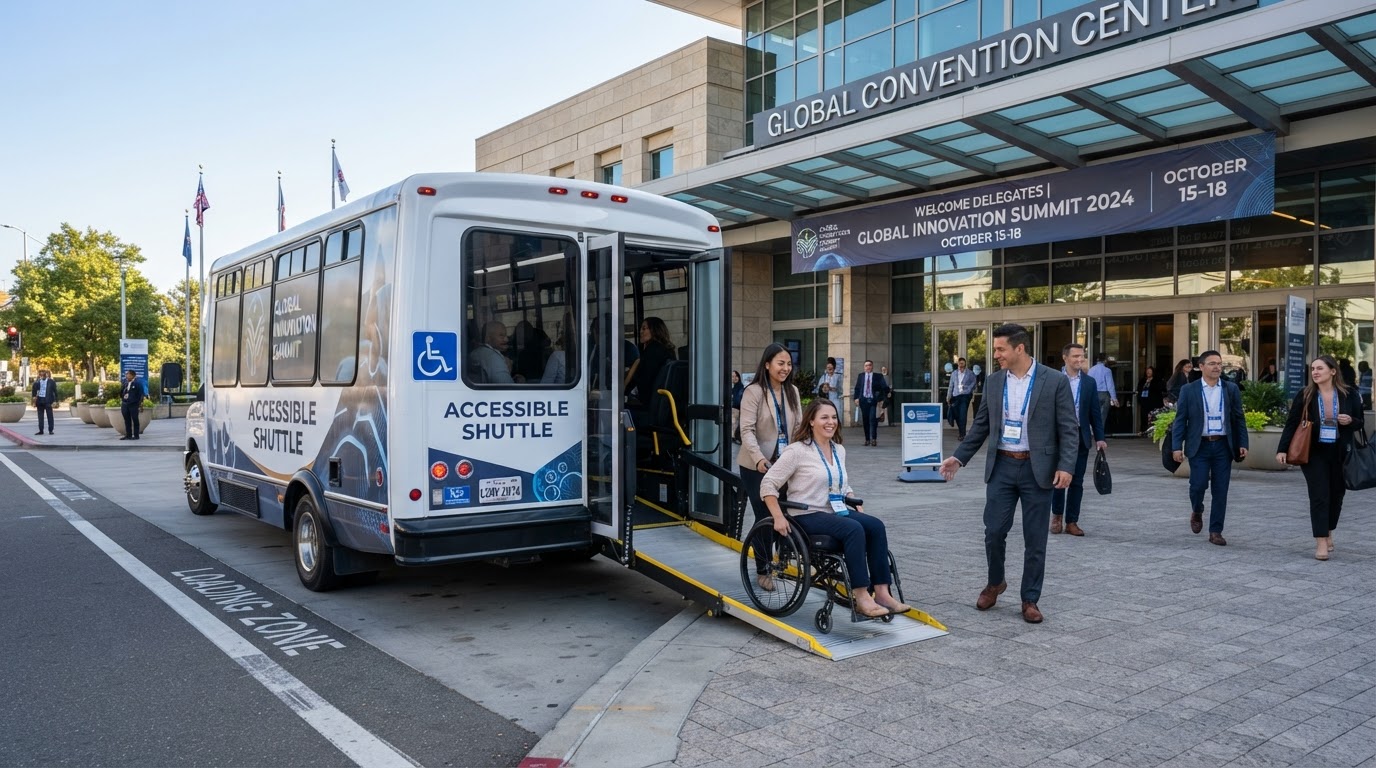
Accessibility must be designed in from the start, not added as an afterthought. At least one wheelchair-accessible van with a lift or ramp should be in continuous rotation, and the satellite stop should have a paved, level boarding pad with a clear path to the van's lift. Train drivers on securement procedures and ensure they allow adequate time for ramp deployment without rushing passengers. Posting the accessible shuttle's expected arrival time on the digital signage prevents anxious waiting for guests who depend on it.
Communication is the glue that holds a shuttle system together. Equip every driver with a two-way radio linked to a central dispatcher who monitors vehicle positions, adjusts rotation in real time, and redirects vehicles to hubs with the longest queues. A simple passenger-facing text alert system—'Your shuttle to the main entrance departs in 2 minutes'—reduces perceived wait time and keeps guests informed even when the system is operating perfectly.
Finally, plan the return trip with the same rigor as the outbound. Departure surges at event close can overwhelm a shuttle system designed only for arrivals. Stage extra vehicles at the main entrance during the final hour, and pre-position vans at the satellite lot so that returning guests face the same short wait they experienced on arrival.
Planning an event with more than 50 guest vehicles? Professional valet parking planning ensures safety, prevents traffic gridlock, and gives guests a memorable first impression. Browse verified valet parking companies in your area to discuss attendant ratios, staging logistics, and insurance coverage.
Related Guides
Need Event Valet Services?
Browse verified valet parking companies in your city.
Advertisement