
 Advertisement
Planning Event Valet Parking: A Complete Logistics Checklist
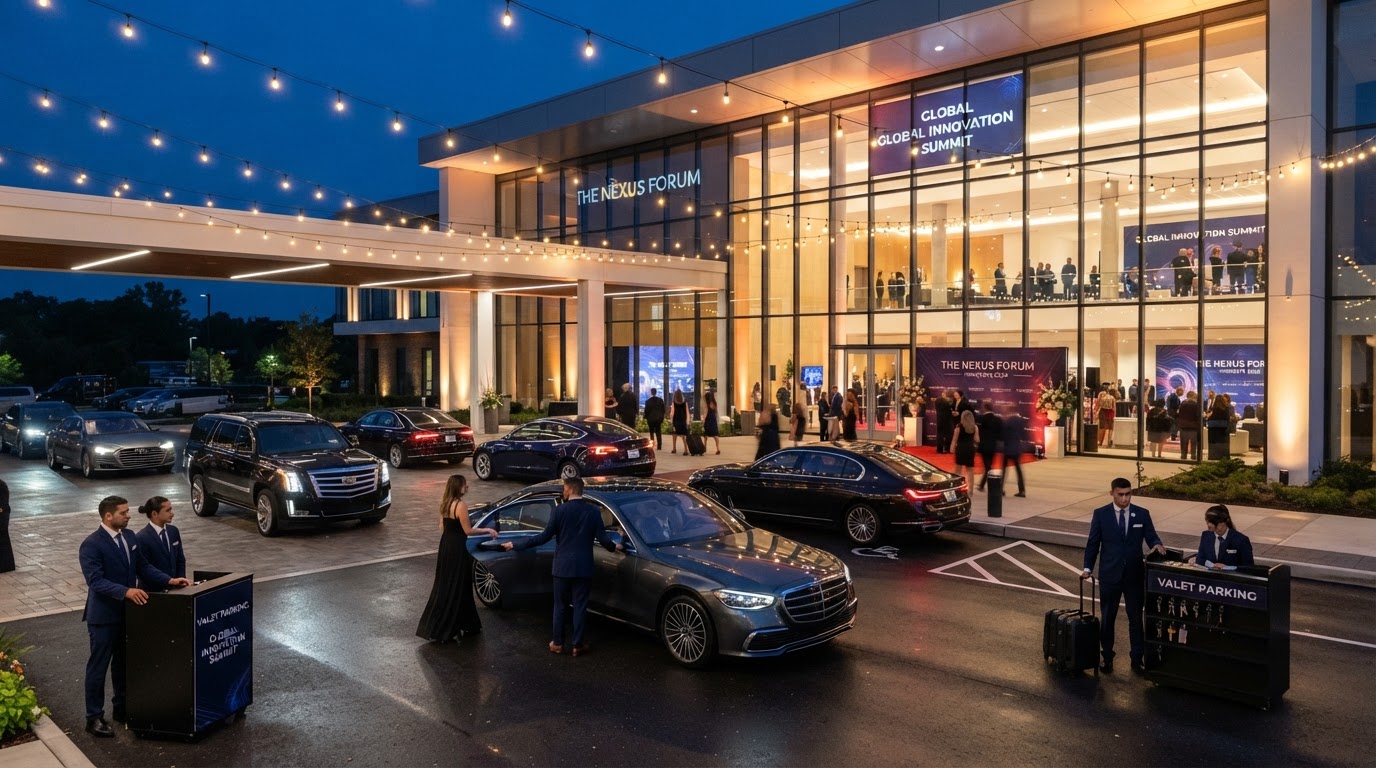
From staffing ratios to staging plans and departure surges, here is what event planners need to coordinate before hiring a valet company.
Successful event valet parking does not happen by accident. It is the result of a detailed logistics plan that accounts for guest volume, driveway geometry, parking capacity, staffing, and the inevitable departure surge that closes every event. Skipping the planning phase turns a manageable parking operation into a curb-side bottleneck that guests remember for the wrong reasons. This checklist walks through the key planning decisions an organizer should make before the first guest vehicle ever turns onto the property.
Start with arrival modeling. Estimate the number of vehicles by dividing expected guests by the average occupancy per car—typically 1.8 to 2.2 attendees per vehicle for a formal event. Then map the compressed arrival window. Most guests arrive within a 30- to 45-minute span, meaning a 200-guest event can see 100 vehicles descend on a single driveway in under an hour. Understanding this surge is the foundation of all event valet parking logistics, because it determines how many intake lanes you need and how many attendants must be stationed at the curb to keep vehicles moving.
Next, assess the staging plan. Where will parked vehicles sit during the event? If the venue's on-site lot holds 40 cars and you expect 100, you need an overflow lot within a short drive—ideally under five minutes each way. Confirm that the overflow lot is paved, lit, and accessible for the event's duration, and that the valet company has permission to use it. A staging plan that falls apart at 9 PM when the overflow lot's gate locks leaves guests stranded and the valet captain scrambling. Walk the lot in daylight and confirm access hours in writing before the event.
Staffing ratios follow from the arrival model. Industry best practice recommends one valet attendant per 18 to 22 expected vehicles during peak arrival. For a 100-vehicle event, that means five to six attendants at the curb, plus a key captain managing the podium and a runner retrieving vehicles from the overflow lot. Add a traffic director at the street entrance if the driveway is narrow or if arriving traffic could spill onto a public road. Understaffing to save on labor is the most common mistake in event valet parking planning, and it is visible to guests the moment the curb backs up.
The departure plan deserves equal rigor. At event close, 200 guests do not trickle out individually; they leave in a compressed surge, often within 15 minutes. A valet team that handled arrival smoothly can still fail at departure if they have not pre-staged vehicles or staffed the curb for the exit surge. Brief the captain on the event's closing time, and have them begin pre-fetching vehicles 15 minutes before the program ends so that cars are arriving at the curb as guests are walking out. This is the difference between a five-minute wait and a 25-minute wait, and it is entirely in the planning.
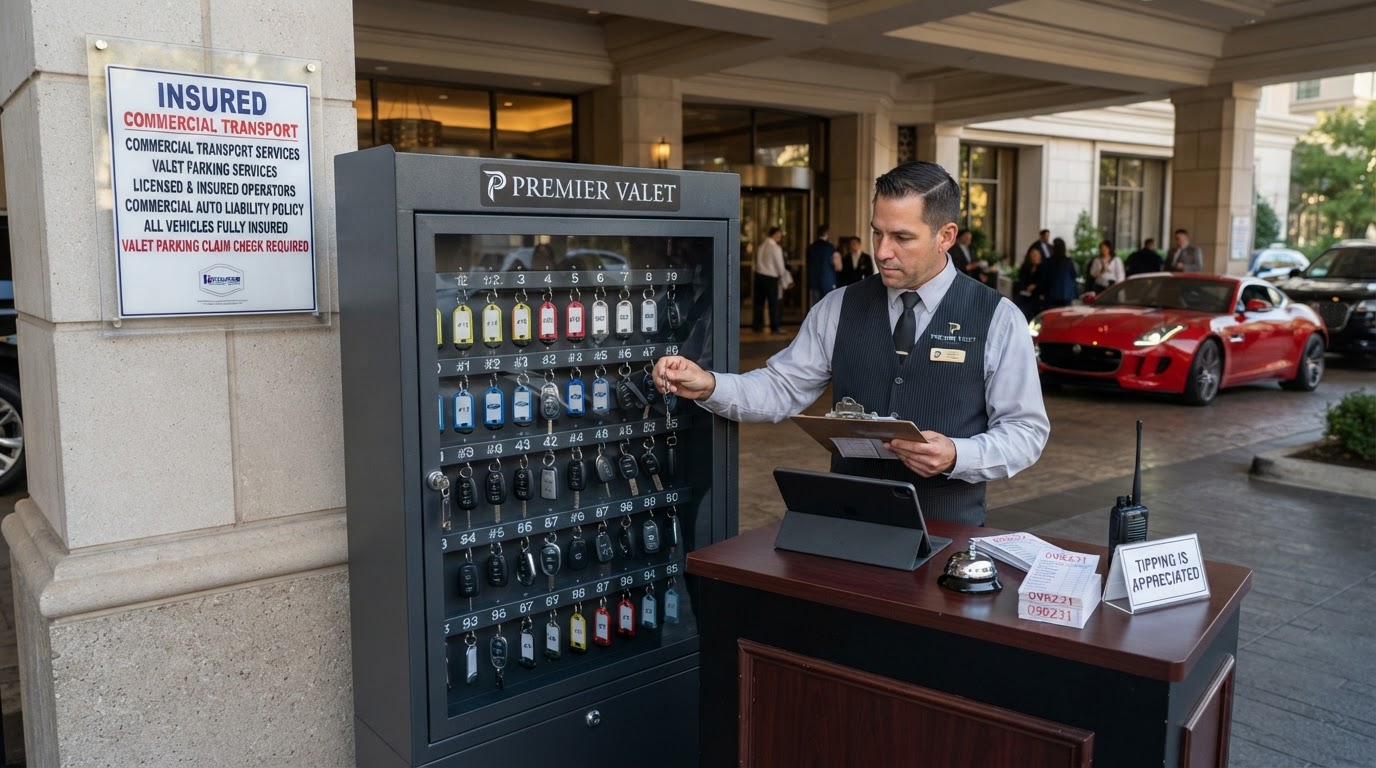
Finally, build contingencies. Rain, a delayed keynote, a blocked overflow lot, or a stalled vehicle at the porte-cochère can each derail an otherwise solid plan. A professional valet company arrives with backup key podiums, extra umbrellas, a traffic director on call, and a communication protocol that connects the captain to the event planner in real time. Event valet parking is as much about preparing for the unexpected as it is about executing the plan, and the providers who excel are the ones who have seen the failure modes before and planned for each one.
Planning an event with more than 50 guest vehicles? Professional valet parking planning ensures safety, prevents traffic gridlock, and gives guests a memorable first impression. Browse verified valet parking companies in your area to discuss attendant ratios, staging logistics, and insurance coverage.
Related Guides
Need Event Valet Services?
Browse verified valet parking companies in your city.
Advertisement